Lunar New Year traditions center on family, food and welcoming good luck. Think spotless houses, a feast on New Year’s Eve, red envelopes of money for the kids, lion and dragon dances, firecrackers, and red everywhere you look. Lunar New Year 2027 begins on Saturday, February 6. Here’s what each tradition means.
Who celebrates Lunar New Year?
Lunar New Year is celebrated by Chinese, Vietnamese, Korean, Mongolian and other communities around the world, under different names: Spring Festival in China, Tết in Vietnam, Seollal in Korea and Tsagaan Sar in Mongolia. Many customs are shared, and each culture also has its own. See who celebrates Lunar New Year, country by country.
What happens before Lunar New Year?
A big clean comes first. Families clean their homes before New Year’s Day, and traditionally avoid sweeping or dusting on the day itself, so the good luck doesn’t get swept out the door. People also buy new clothes, get haircuts and try to settle debts and arguments before the new year begins.
What is the reunion dinner?
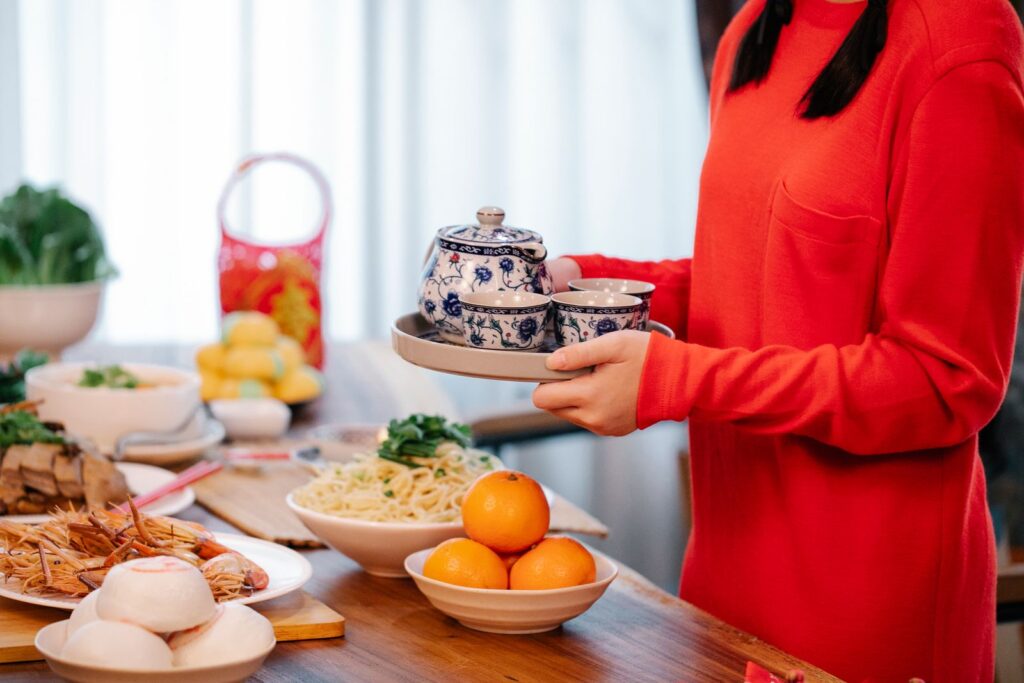
On Lunar New Year’s Eve, families gather for a large reunion dinner, and every dish is chosen for a lucky meaning. In Chinese, the word for fish sounds like the word for surplus or prosperity, so fish is a common dish. Vietnamese families prepare bánh chưng, a square sticky rice cake, and Korean families eat tteokguk, a rice cake soup.
Why are dumplings a Lunar New Year food?
Dumplings (jiǎozi) are shaped like the gold and silver ingots once used as money, so eating them is a wish for wealth in the new year. In northern China, families often make them together before midnight on New Year’s Eve, and chopping the filling by hand is said to chop away bad luck. Pan-fried dumplings are called guōtiē, or potstickers.
“My mom made jiǎozi (dumplings) and guōtiē (potstickers) from scratch: the dough, the filling, every fold. Some got boiled, some got pan-fried until the bottoms were golden and crispy, and somehow there were never any left over.”
Ben, founder of LunarNewYearEvents.com
What are red envelopes?
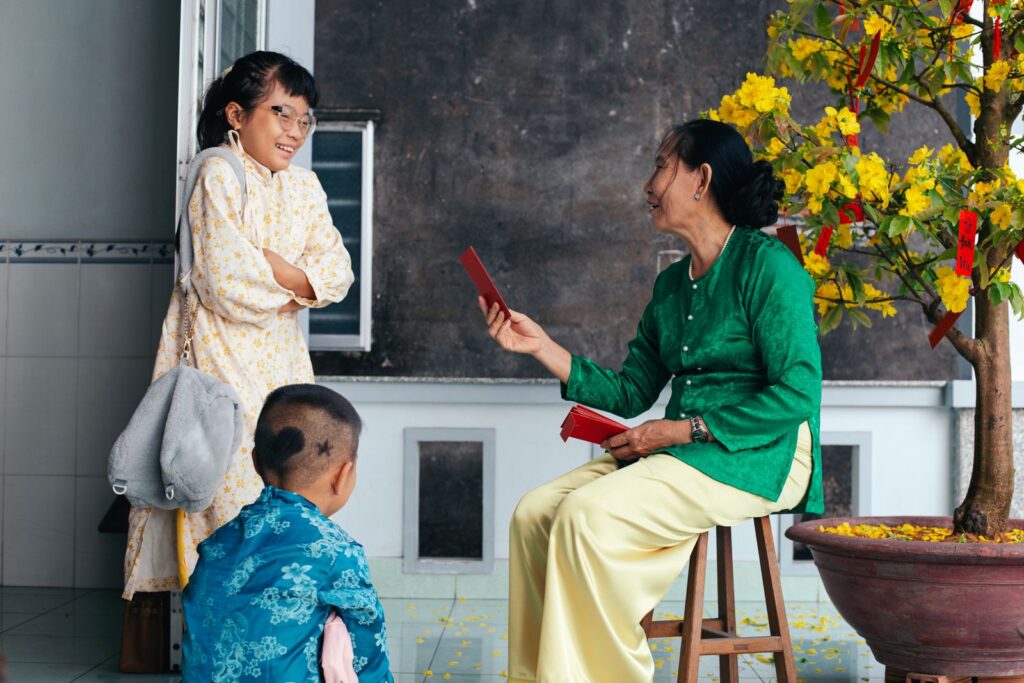
Red envelopes (hóngbāo) hold gifts of money, usually from married adults to children and younger, unmarried relatives, as a wish for good fortune in the new year. Korean families also give New Year money to younger relatives. Even amounts are customary; amounts with 8 are considered lucky, and 4 is avoided.
“Every Lunar New Year, the red envelopes came from everywhere: my parents, my aunt and uncle, my grandparents. I learned to accept each one with both hands and a thank-you, and to wait until later to peek inside. Waiting was the hardest part.”
Ben, founder of LunarNewYearEvents.com
Why are there lion dances and firecrackers?
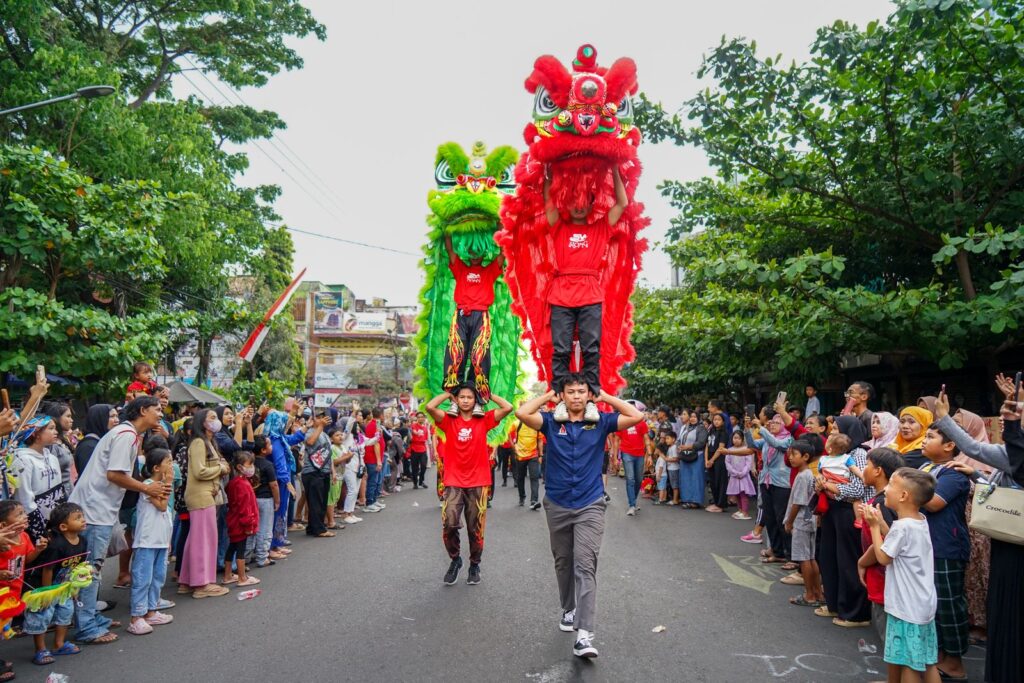
To chase away bad luck, as loudly as possible. Long strings of firecrackers are lit to scare away bad luck and evil spirits, and drumming and lion dancers in elaborate costumes accompany the celebration. Lion dances (wǔ shī) and dragon dances (wǔ lóng) are the centerpiece of most Lunar New Year parades and festivals in the US and Canada.
“My favorite part was always the lion and dragon dances at our local Chinese Taiwanese cultural center. You hear the drums before you see anything. Then the lion bursts in, and every kid in the room forgets to breathe.”
Ben, founder of LunarNewYearEvents.com
Why is red the color of Lunar New Year?
Chinese and Vietnamese celebrations use red throughout, from clothing to red paper with written good wishes, and red lanterns decorate homes and streets. Black and white are traditionally avoided at New Year: black is seen as unlucky and white is the color of Chinese funerals. In Mongolia, by contrast, white is the color of happiness and health.
What is the Lantern Festival?
The grand finale. The Lantern Festival on the 15th day of the first lunar month closes the new year celebrations with lantern displays. In 2027 it falls on Saturday, February 20.
Where to see Lunar New Year traditions near you
The best way to understand these traditions is to see them in person, and to eat your way through the food stalls.
“Right after the dances came the food: home-cooked dishes from the vendors. My very favorite was lǔ ròu fàn, braised pork belly over rice, with a soy-braised egg (lǔ dàn) on the side. I’d circle back to the stalls two or three times. Nobody leaves those celebrations hungry.”
Ben, founder of LunarNewYearEvents.com
Parades, lion dances and festivals take place in cities across North America. Browse events in New York, San Francisco, Los Angeles, Washington, DC, Atlanta and more. Learn about Vietnamese Tết and Korean Seollal.
Frequently asked questions
What should you not do on Lunar New Year?
Traditional customs say to avoid sweeping, washing or cutting hair, using knives or scissors, lending money, and talking about death on New Year’s Day, so good luck isn’t cut off or swept away.
Who gives red envelopes?
Usually married adults and elders give them to children and younger, unmarried relatives.
Sources
- Smithsonian Asian Pacific American Center: The Lunar New Year
- Farmers’ Almanac: When is Chinese New Year?
- Royal Museums Greenwich: Lunar New Year dates and animals
- Smithsonian Asian Pacific American Center: Eating silver and gold (jiaozi)
- Wiktionary: hóngbāo
- Hanbook Chinese dictionary: wǔ lóng (dragon dance)
- Hanbook Chinese dictionary: lǔ ròu fàn
- Jyut Dictionary: 鍋貼 guōtiē (potsticker)